Discover how warecache replaces manual counting with measured quantities, and keeps parts, projects, and production visible from the desktop to the floor.
Weight and switch sensor bins measure what is inside them and report it through a PoE container controller. Quantities in warecache are always the measured value, so there is nothing to count by hand and nothing to type in.
Monitor your entire inventory at a glance. Track stock per container and per sensor, see usage over time, and get alerts for low stock, stale sensors, and end-of-life parts.
Understand what your inventory costs and where it is headed. warecache rolls build cost up from BOMs, tracks distributor price breaks, and flags parts approaching end of life.
Organize your inventory with project and Bill of Materials (BOM) management. Track parts across multiple projects, manage versions, and see at a glance what is in stock for the next build.
| Component | Qty | Stock | Status |
|---|---|---|---|
| ATmega328P | 1 | 12 | OK |
| 10k Resistor | 8 | 234 | OK |
| 100nF Capacitor | 4 | 3 | Low |
| USB-C Connector | 1 | 0 | Out |
Turn a project version into work on the floor. A production order lists what to build, shows which parts you are short, and moves through a clear set of states from draft to completed.
| Order | Project | Qty | Status |
|---|---|---|---|
| PO-0142 | Controller Board v2.1 | 25 | In Progress |
| PO-0143 | Power Module v1.0 | 10 | Confirmed |
| PO-0144 | Sensor Node v1.0 | 50 | Pending |
| PO-0139 | Motor Mount v1.1 | 12 | Completed |
Self-hosted by default, so your inventory data stays on your network. People sign in with a password or through your identity provider, tools use API tokens, and every controller proves who it is with a certificate.
users password or OIDC single sign-on
roles Guest < Default < Admin
tools API tokens
sessions revocable, stored server-side
devices client certificate, mutual TLS
transport TLS to the API and the MQTT broker
Everything in warecache is reachable through an authenticated REST API and the wc-api client library, the same library the desktop and mobile clients are built on. Python plugins pull distributor pricing and stock on a schedule.
[
{
"ipn": 1042,
"mpn": "SHCS M3x10 SS18-8",
"manufacturer": "McMaster-Carr",
"quantity": 142,
"lifecycle": "Production"
},
{
"ipn": 1043,
"mpn": "HexNut M3 SS18-8",
"manufacturer": "McMaster-Carr",
"quantity": 12,
"lifecycle": "Production"
}
]
The desktop client and the phone app as they are today.
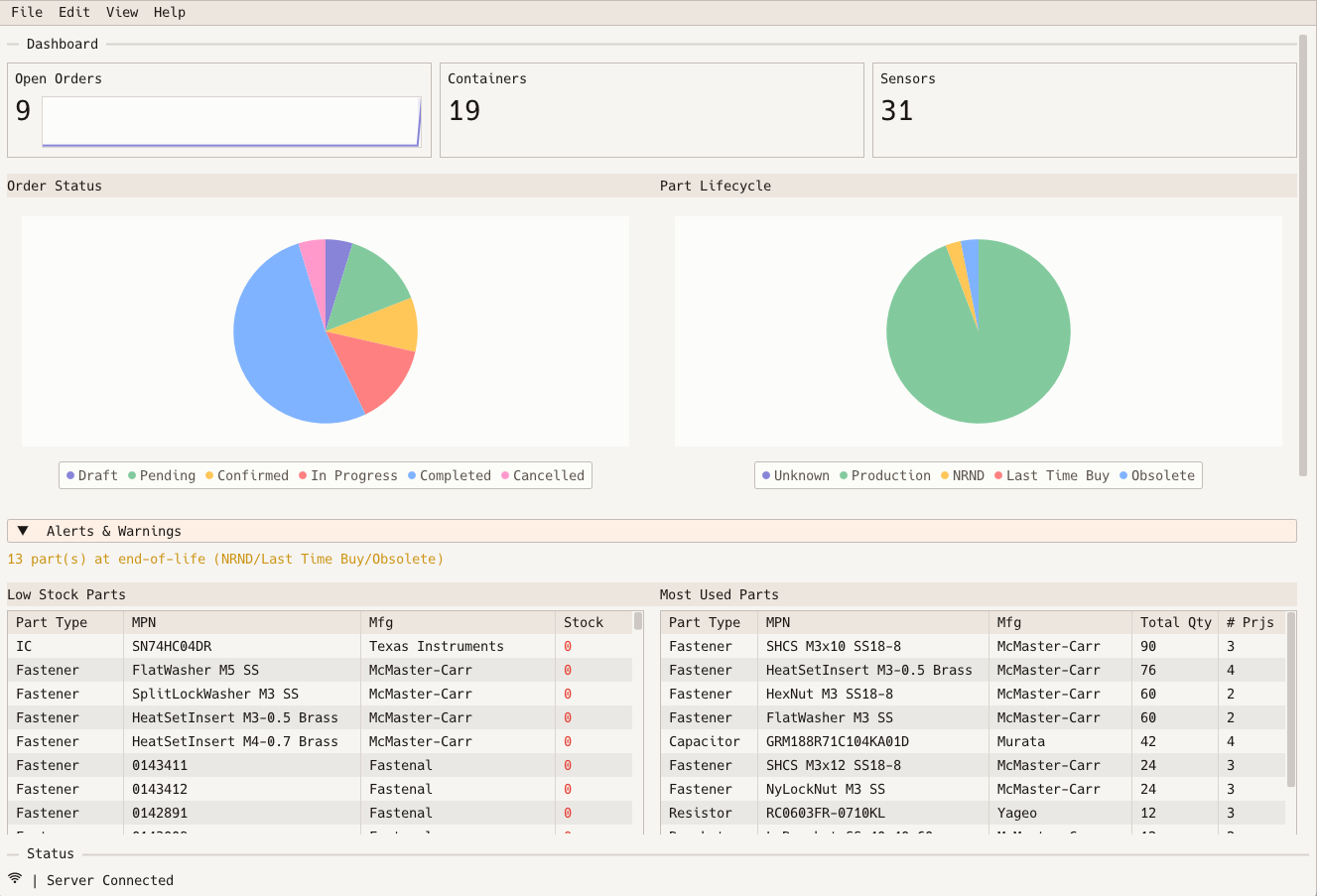
The first view after login. Open orders with a ninety-day trend, container and sensor counts, order status and part lifecycle charts, an alert for parts at end of life, and the low-stock and most-used tables.
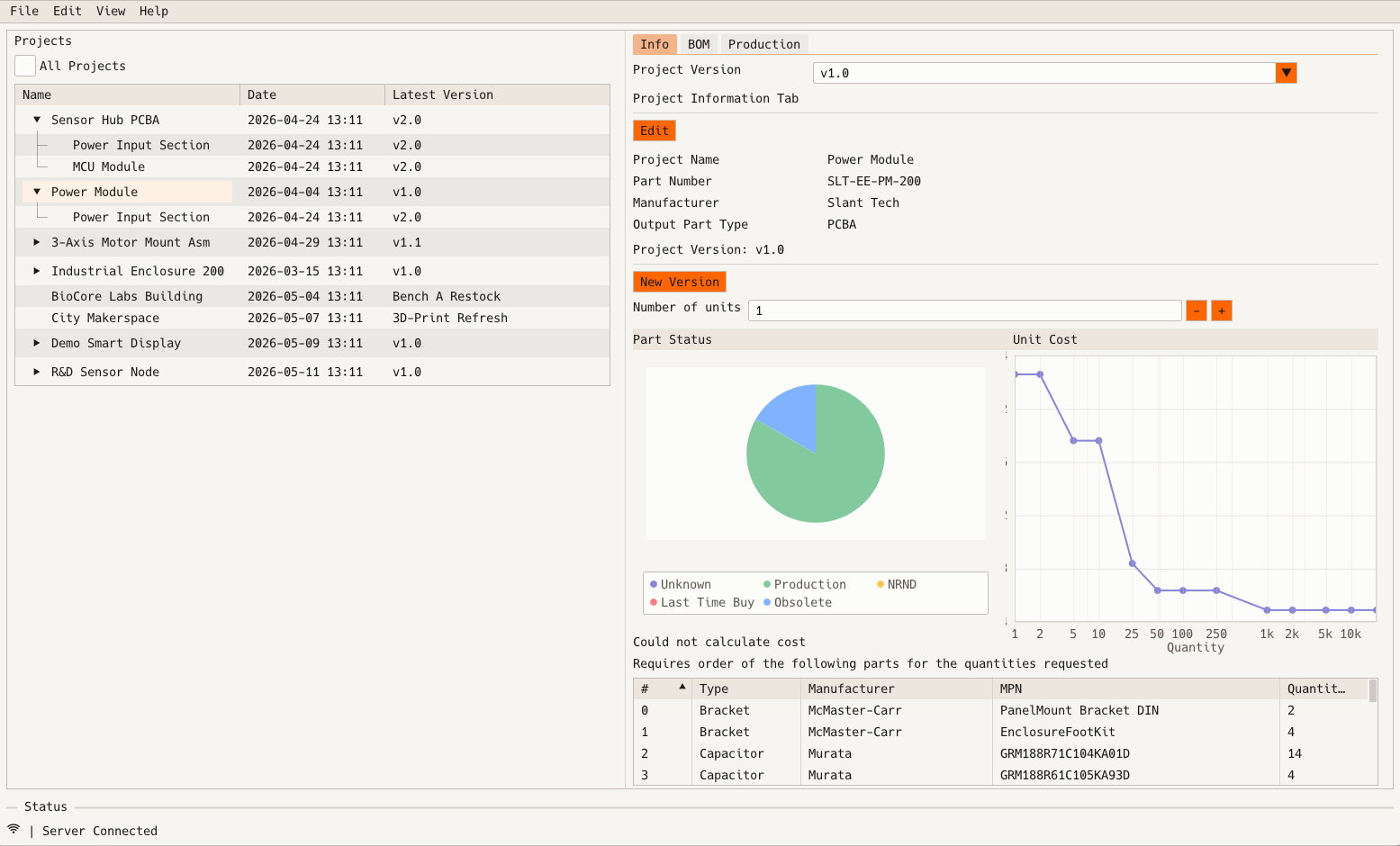
The project tree with sub-projects and versions on the left. On the right, the selected version's part status, unit cost against quantity from distributor price breaks, and the parts that must be ordered to build the number of units entered.
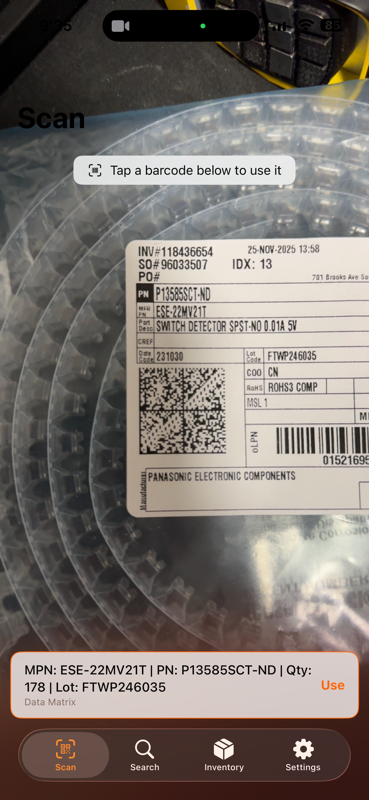
Point the camera at a reel or bag label. The Data Matrix code carries the manufacturer part number, quantity, and lot, and the app decodes it, looks the part up, and offers to put it in a bin.